Secure Entry Vestibules for K-12 Schools: Design, Benefits, and Best Practices
April 21, 2026

Architecture | Engineering | Construction
April 21, 2026
Every school opens its doors each day with the same goal: creating an environment that feels welcoming, accessible, and safe for students, staff, and visitors.
As districts continue to evaluate school safety, many are looking beyond standalone security devices and focusing on how building design can better support day-to-day operations. While no single feature can guarantee safety, intentional planning and thoughtful design can play a meaningful role in strengthening a school’s overall security strategy.
One of the most effective and widely adopted solutions in K-12 facilities is the secure entry vestibule.
From a design-build perspective, secure entries are most successful when they are planned as part of a larger conversation around visitor management, staff workflow, student circulation, and operational efficiency. When integrated correctly, they can improve visibility, reinforce established protocols, and create a more controlled and intuitive arrival experience.
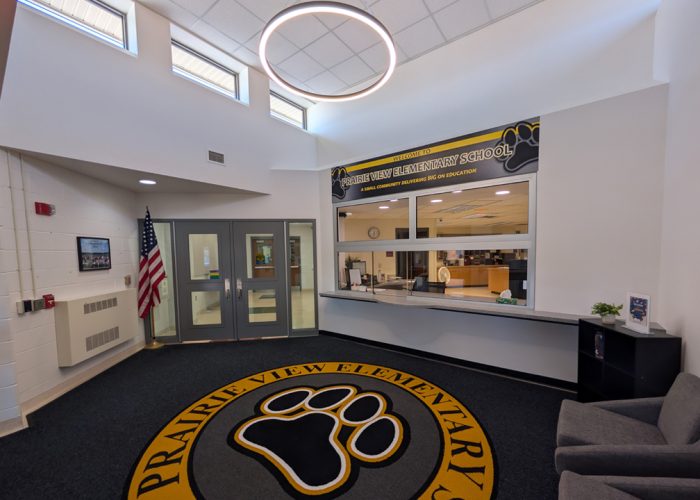
A secure entry vestibule is a controlled access point located at a school’s main entrance. It creates a transition zone between the exterior of the building and the occupied interior, allowing staff to monitor, verify, and manage visitors before granting access into the school.
Rather than allowing visitors direct access to hallways, classrooms, or common areas, the vestibule establishes a defined sequence of arrival. Visitors enter through a secured exterior door, remain within the vestibule, and are then directed through the administrative office for identification, sign-in, and authorization.
In well-designed schools, the secure entry is not treated as an isolated feature. It is integrated into the overall building layout and aligned with the district’s vision for how the facility will function daily.
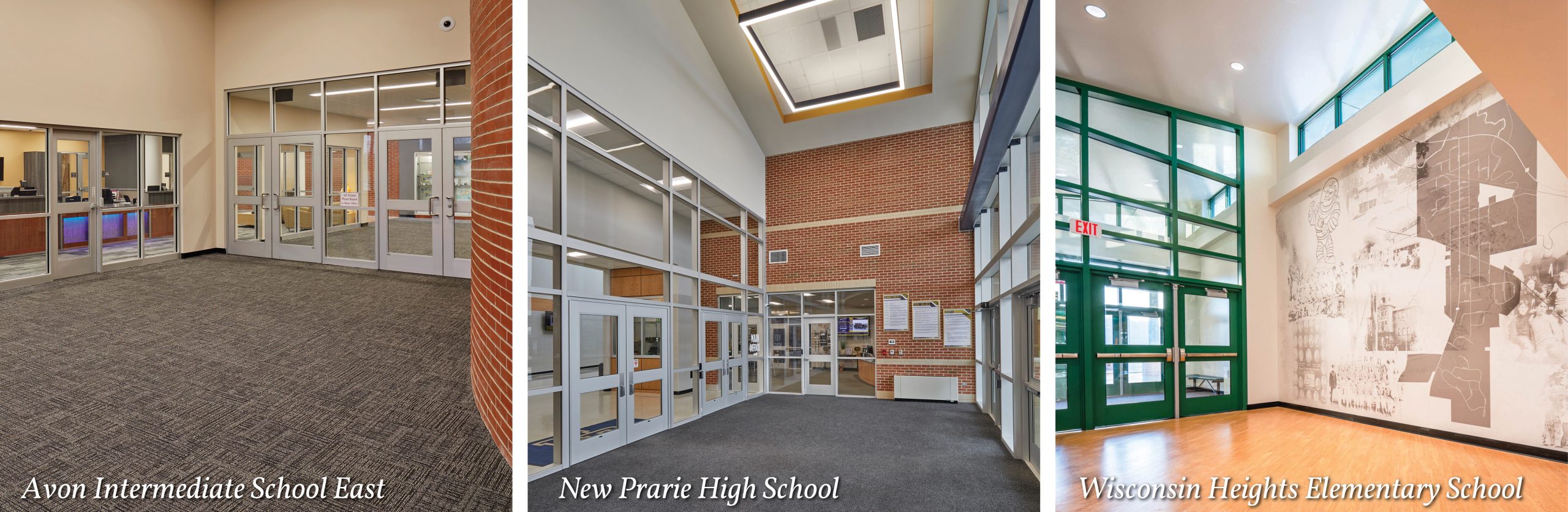
A school should never feel unwelcoming. The best secure entries maintain a positive first impression while still creating a clear sense of order and control.
From a planning standpoint, a secure entry vestibule can help schools:
Most importantly, secure entries help align the physical environment with the district’s broader goals for safety, communication, and operational consistency.
It is important to remember that building design is only one component of a comprehensive school safety strategy. The most effective solutions combine design, technology, staffing, and clear administrative procedures.
While every district and facility is different, the most effective secure entries typically include several core design elements.
Visitors should enter through a locked exterior door and remain within the vestibule until staff grants access. This prevents direct entry into the building and creates a clear checkpoint before visitors reach occupied areas.
Front office staff should have a direct view into the vestibule. This is often achieved through interior glazing, sidelights, borrowed light, or strategically placed camera systems. Visibility is one of the most important design considerations because it allows staff to assess visitors quickly and communicate effectively before unlocking the next point of entry.
A secure vestibule should route visitors directly through the administrative office before they can access the rest of the school. This reinforces sign-in procedures, visitor badge protocols, and other district-specific requirements.
Intercoms, access control systems, remote door release hardware, visitor management software, and security cameras all contribute to a more functional and manageable entry sequence.
Secure entries should feel professional, durable, and welcoming. Material selections should balance aesthetics with long-term performance, particularly in high-traffic areas where doors, glazing, flooring, and hardware will be used daily.
The vestibule should be intuitive, accessible, and appropriately sized to accommodate multiple visitors without congestion. This is especially important during peak arrival periods, special events, and parent-teacher conferences.
At its core, a secure entry vestibule is not just about adding another locked door. It is about creating an intentional sequence of arrival that supports how the building functions every day.
When designed well, these spaces feel natural rather than restrictive. Visitors know where to go, staff feel supported, and students can move through the building without unnecessary disruption.
This is where a design-build approach can be especially valuable.
By bringing designers, builders, school administrators, facility leaders, and educational planners together early in the process, teams can evaluate existing conditions, identify operational challenges, and develop practical, cost-effective solutions.
Rather than viewing security as a standalone scope item, design-build teams can incorporate secure entry planning into the broader conversation around renovations, additions, circulation improvements, and long-term facility goals.
For districts considering this type of improvement, the first step is often evaluating how people currently enter and move through the building.
Questions to consider include:
In many cases, relatively targeted renovations can create significant improvements in both security and day-to-day functionality. If you want help evaluating the facilities in your district, contact us for a no-obligation facilities assessment.
Secure entry vestibules can be implemented through a variety of project types, including:
Because these projects involve both operational and construction considerations, many districts benefit from engaging a design-build team early in the process. An integrated team can help assess existing conditions, establish priorities, develop preliminary concepts, evaluate costs, and create a solution that aligns with the district’s safety goals and budget.
When approached thoughtfully, a secure entry vestibule can do more than improve access control. It can strengthen the overall experience for staff, students, and visitors while supporting a safer, more efficient school environment.
Ready to start building with us? Contact us today, and our team will meet with you to discuss how our experts can take your next construction or renovation project to the next level.