
Article Takeaways:
- Adaptive reuse transforms existing buildings into spaces that meet today’s needs while preserving their structure, history, and character.
- Repurposing aging schools, municipal buildings, warehouses, and historic properties can strengthen communities, improve sustainability, and maximize public investment.
- Not every building should be adaptively reused—evaluating structural condition, costs, long-term goals, and community priorities is essential before deciding between renovation, reuse, or new construction.
- Successful adaptive reuse requires thoughtful planning, design, and construction to balance historic preservation, modern building performance, accessibility, and functionality.
- An integrated design-build approach helps owners reduce risk, solve unforeseen challenges, and keep adaptive reuse projects on schedule and aligned with project goals.
Adaptive Reuse: A Complete Guide to Repurposing Existing Buildings
Many communities have buildings that have outlived their original purpose but still hold potential. An aging school, historic theater, former factory, or municipal building may no longer meet today’s needs, yet demolishing it isn’t always the best solution.
What Is Adaptive Reuse?
Adaptive reuse is the process of renovating an existing building so it can serve a new purpose while preserving as much of the original structure and character as possible.
Rather than knocking the structure down and starting from the ground up, adaptive reuse transforms the building to fit the owner’s current needs. For cities, towns, higher education campuses, and K-12 districts, it can be an opportunity to strengthen downtown districts, preserve local heritage, improve sustainability, and maximize taxpayer investments.
Examples of Adaptive Reuse Projects Can Include:
- Converting an old school into administrative offices or a community center.
- Transforming a historic theater into a civic gathering space.
- Repurposing a warehouse into offices or educational spaces.
- Converting a former industrial facility into a mixed-use development for the community.
- And much more!
There are endless ways to repurpose underutilized buildings. When we work with communities, our goal isn’t simply to preserve a building; it’s to create spaces that continue to serve the community for decades to come.
What Types of Buildings Can Be Adaptively Reused?
Adaptive reuse can be applied to many different types of public and private buildings. While every project begins with an evaluation of the existing facility, many structures that no longer serve their original purpose can successfully be transformed to meet today’s needs.
Schools
As enrollment patterns change and facilities age, former schools can be repurposed into district administration offices, community centers, workforce development spaces, early childhood education centers, or higher education facilities.
Municipal Buildings
Historic city halls, courthouses, police stations, and public service buildings can be renovated to support modern government operations while preserving important community landmarks.
Historic Buildings
Buildings with architectural or historical significance often become museums, performing arts venues, event spaces, civic centers, or mixed-use developments that continue serving the community.
Warehouses and Industrial Facilities
Large open floor plans make former warehouses and manufacturing facilities ideal candidates for offices, educational facilities, recreation centers, or innovation hubs.
Community and Cultural Facilities
Libraries, theaters, churches, and other community gathering places can often be reimagined to support new programs while maintaining their role as neighborhood destinations.
Why Adaptive Reuse Is Becoming More Common?
Communities and school districts are balancing aging infrastructure, limited budgets, changing population needs, and increasing pressure to make responsible use of public resources.
At the same time, many downtown areas contain buildings with strong structural foundations, recognizable architecture, and historical significance. Rather than abandoning these assets, public owners are finding new ways to revitalize them.
Adaptive reuse allows communities to invest in what they already have while creating spaces that better support residents, students, and economic development.
What Are the Benefits of Adaptive Reuse?
The benefits of adaptive reuse extend far beyond saving time and money.
1. Preserve Community Identity
Historic buildings often represent decades of local history and shared memories. While a building’s original purpose may no longer fit today’s needs, its architectural character and connection to the community still have value. Adaptive reuse preserves those defining features while creating spaces.
2. Revitalize Downtown Districts
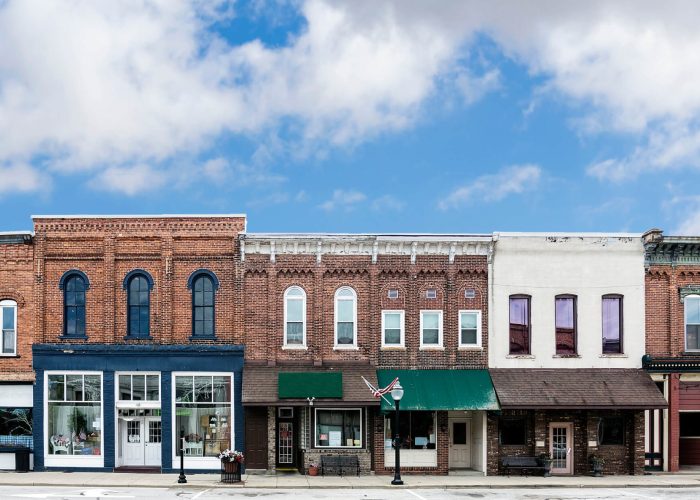
One adaptive reuse project can create momentum for an entire downtown. When vacant buildings become active again, it can encourage more people to spend time downtown and support nearby businesses. Restaurants, retail, housing, entertainment venues, and additional redevelopment often follow.
3. Maximize Existing Public Investment
Many existing buildings already have valuable infrastructure in place, including utilities, roads, sidewalks, and parking. Repurposing these assets can often make more strategic use of previous public investments than starting from scratch on a new site. Communities can also maintain the familiarity and accessibility residents already associate with these locations.
4. Support Sustainability Goals
One of the greatest sustainability opportunities in construction is extending the life of an existing building. Adaptive reuse reduces demolition waste and preserves much of the building’s embodied materials while allowing outdated mechanical, electrical, plumbing, and building systems to be replaced with modern, energy-efficient solutions.
Many adaptive reuse projects also include upgrades that improve building performance while reducing long-term operating costs:
- LED lighting
- Building automation systems
- Water conservation
- High-efficiency HVAC systems
- Improved insulation
- Energy-efficient windows
5. Create Flexible Spaces for Changing Needs
Communities today desire buildings that serve multiple purposes. Adaptive reuse creates opportunities to combine services that may have once existed in separate locations, making public facilities more convenient and efficient. Mixed-use civic facilities help maximize building utilization while encouraging more activity throughout the community.
How Does the Adaptive Reuse Process Work?
Every adaptive reuse project is unique, but most follow a similar planning and design process. Evaluating the building early helps owners determine whether adaptive reuse aligns with their long-term goals, budget, and operational needs.
Process for Redeveloping an Existing Building:
- Evaluate the Existing Facility: Assess the building’s structural condition, systems, and overall suitability for renovation. There are many factors that will be considered in the conditions assessment.
- Identify Community or Organizational Needs: Determine how the building will support future operations, programs, and users. (If you work in education, consider working with an educational planning consultant to align your needs and goals with the project.)
- Develop a Master Plan: Explore options, establish priorities, and create a roadmap for implementation.
- Design the Renovation: Balance preservation of existing features with modern building codes, accessibility, functionality, and efficiency.
- Complete Construction: Implement the renovations to address the existing conditions and minimize project risks.
- Commission and Occupy the Facility: Verify building systems perform as intended and prepare the facility for long-term success. Performance Services offers performance assurance to help guarantee your building’s performance.
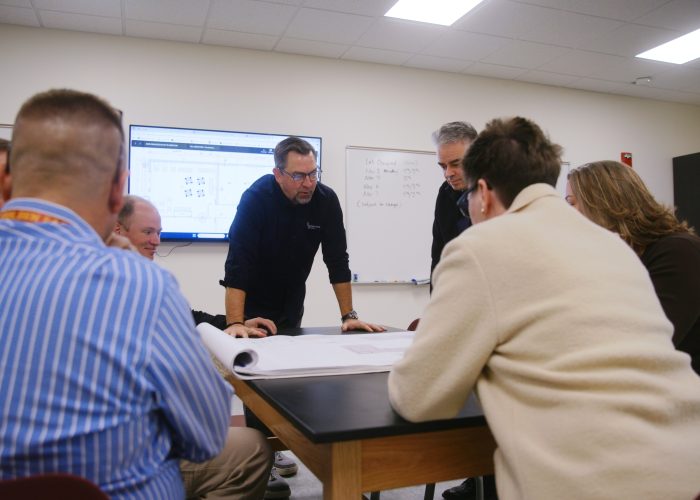
A collaborative planning and design process helps identify potential challenges early and keeps the project aligned with the owner’s goals throughout construction.
Is Adaptive Reuse Better Than New Construction?
Adaptive reuse may not be the best option for your project, so it is important to work with a professional partner to help you identify a solution that is best suited for your goals. For example, some buildings may have deteriorated beyond practical repair, while others cannot reasonably support modern code or operational needs.
Key Factors to Consider When Deciding Between Adaptive Reuse and New Construction:
- Structural condition
- Historic significance
- Long-term operational goals
- Accessibility requirements
- Existing infrastructure
- Cost of renovation compared to replacement
- Community priorities
When deciding what to do, it is always important to consider the long-term value. The right answer depends on the building, the community, and the goals of the project.
Adaptive Reuse vs. Renovation: What’s the Difference?
Although the terms are sometimes used interchangeably, adaptive reuse and renovation are not the same.
A renovation improves or modernizes a building while maintaining its original purpose. Adaptive reuse goes a step further by transforming the building to serve an entirely new function.
For example, renovating an elementary school may include replacing classrooms, mechanical systems, and finishes while continuing to operate as a school. Adaptive reuse could transform that same building into district administrative offices, a community center, or a higher education space.
Understanding the distinction helps communities evaluate which approach best aligns with their long-term needs.
Adaptive Reuse in Action: A Case Study Example
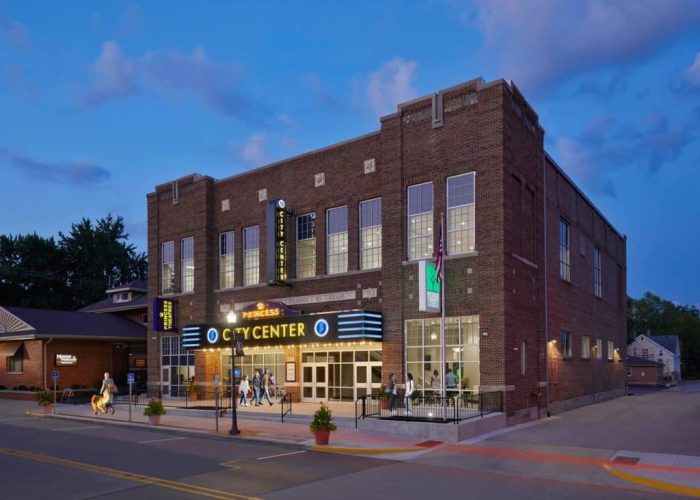
The City of Rushville demonstrates how adaptive reuse can transform a vacant historic building into a destination that serves an entire community.
When a historic Masonic Temple was left vacant, city leaders reimagined the building as a multi-use space that would support community needs and preserve one of their most recognizable landmarks.
Today, the building houses City Hall and municipal offices, Ivy Tech educational space, a theatre, and community event space under one roof.
The project also restored many of the building’s historic architectural elements while incorporating modern infrastructure, energy-efficient building systems, improved accessibility, and updated spaces designed to serve future generations.
Read our complete City of Rushville adaptive reuse case study to learn how this project was delivered on time and on budget.
Why Does Design-Build Work Well for Adaptive Reuse?
Adaptive reuse projects often involve existing conditions that cannot be fully understood until construction begins. Success depends on close collaboration between architects, engineers, and construction professionals from the earliest stages of planning.
An integrated design-build approach helps owners:
- Evaluate existing building conditions early
- Develop realistic budgets before construction begins
- Reduce coordination issues between design and construction
- Solve unforeseen challenges more efficiently
- Maintain project schedules while protecting quality
By bringing planning, design, and construction together under one team, owners can make informed decisions throughout the project while keeping long-term goals at the center of every phase. Continue learning more about the benefits of design-build.
Getting Started with Building Revitalization
Successful adaptive reuse empowers communities to repurpose existing facilities and make better use of existing public investments. For many communities, the most valuable building isn’t one that’s newly constructed. It’s the one that’s been thoughtfully reimagined.
Let’s discuss the project you have in mind. Contact us today to learn more about our in-house design and construction services.