Adaptive Reuse: A Sustainable Development Opportunity for Cities and Towns
April 8, 2026

Architecture | Engineering | Construction
April 8, 2026
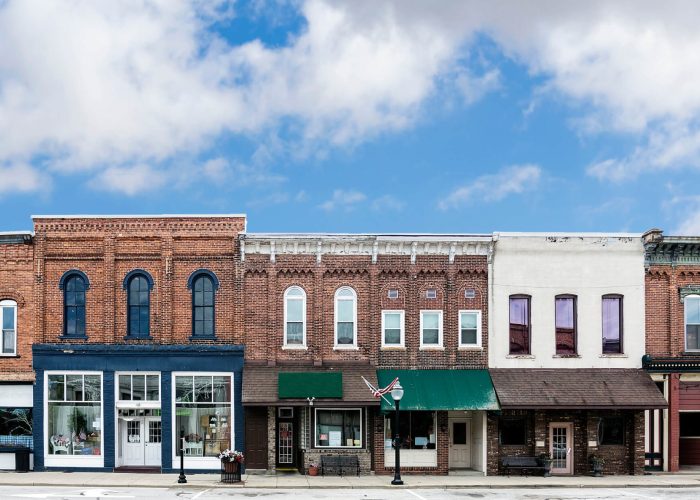
We’ve seen it everywhere. Abandoned buildings. Malls, grocery stores, city centers, and schools that have outlived their useful lives and lay empty, awaiting demolition or a new chapter. These buildings often draw attention for the wrong reasons – safety, crime, and just being unsightly as they remain vacant and unkept.
However, urban repurposing has become a popular solution to giving new life to once-useful buildings.
Urban repurposing, also known as adaptive reuse, is the process of revitalizing existing buildings for a new or different purpose while preserving elements of their original character. Rather than demolishing and rebuilding, communities can transform underutilized or historic structures into spaces that meet current needs.
This approach has become an increasingly attractive option for cities and towns because it offers a cost-effective and sustainable path to economic development. By leveraging existing infrastructure, communities can reduce construction costs, minimize material waste, and accelerate project timelines. At the same time, adaptive reuse helps preserve local history and identity, maintaining the architectural character that makes a place unique.
Beyond the financial and environmental benefits, urban repurposing can also serve as a catalyst for revitalization. Thoughtfully redeveloped spaces often attract new businesses, increase foot traffic, and create gathering places that strengthen community engagement. In this way, adaptive reuse not only extends a building’s life but also infuses the surrounding area with new energy, supporting long-term growth and vibrancy.
Adaptive reuse has many qualities and benefits that lend itself quite well to the design-build construction method.
The design-build approach brings together design and construction services into a single team under a single contractual entity for the owner. As a result, architects and engineers naturally work together to ensure the best possible project outcome.
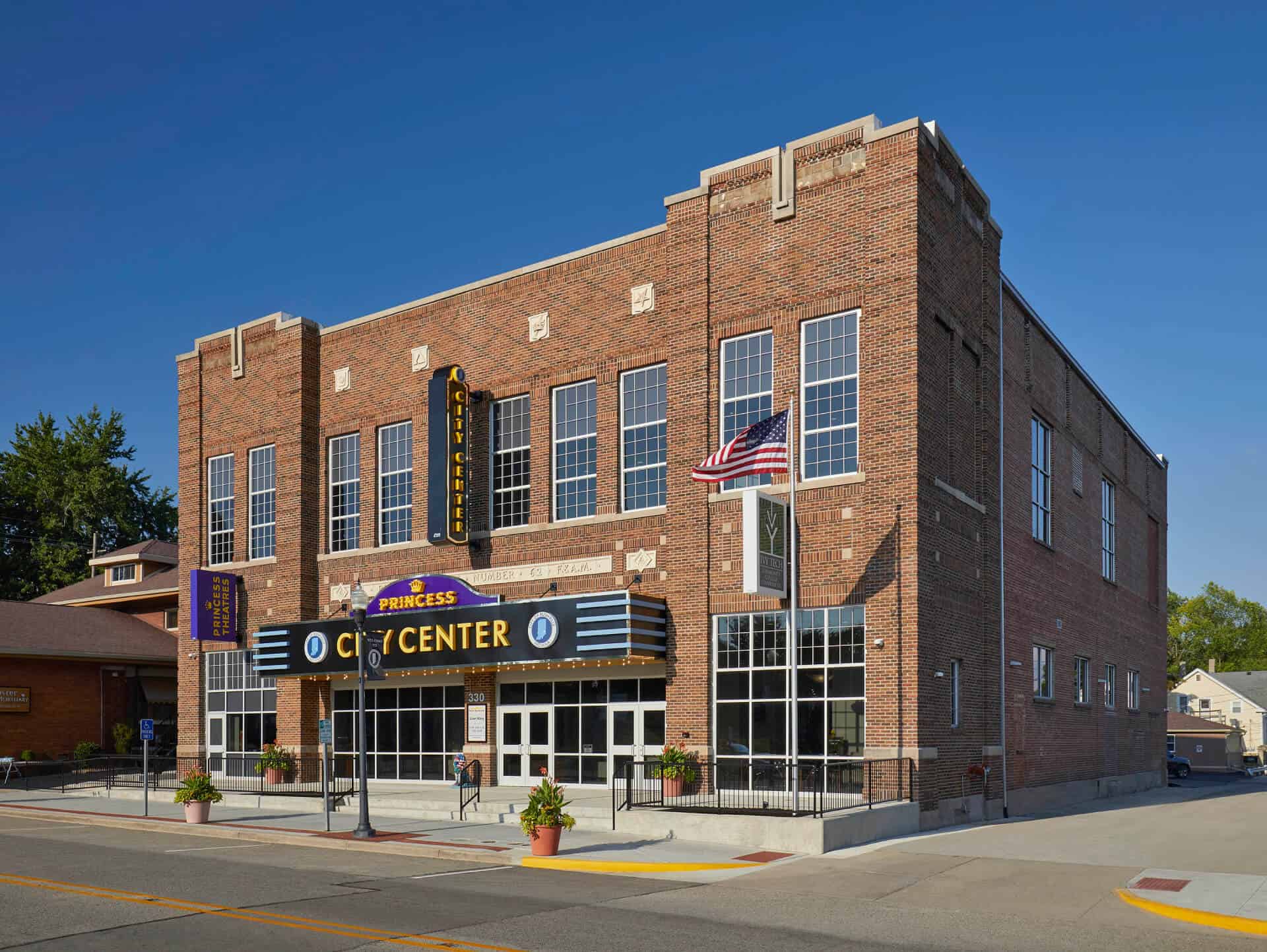
A fitting example of a design-build adaptive reuse project is the City Center located in Rushville, Indiana.
Rushville is home to a century-old historic Masonic Temple in its downtown area. It went empty for nearly two decades after its last tenant, The Princess Theatre, closed its doors in 2001. In 2014, the Masons put the Lodge up for sale, and the City Council promptly purchased the building. This allowed the City to embark on a new and exciting discussion about its future.
After thoughtful dialogue on the building’s use, the City of Rushville decided to create a mixed-use City Center to provide a venue for entertainment, education, and government efficiency, while maintaining the building’s local history. Partnering with Ivy Tech College and the Wolf Theatre for education and entertainment, the City was ready to transform the building.
But, after a false start and budget overruns trying to renovate the building using the traditional design-bid-build delivery method, the City sought a better construction method to complete the project within their budget and timeframe.
The City chose the progressive design-build method for its many benefits, including owner engagement, design-to-budget process, and speed of delivery. The City selected Performance Services to design and construct the project. Working collaboratively with the City throughout design and construction, the renewed building preserves its historical elements while transforming its purpose for modern use.
The building project was completed in 2019 and is now home to the Wolf Theatre, Ivy Tech College, a new City Hall with a Mayor’s office, city government offices, and community meeting space. Learn more about this adaptive reuse project.
Cities and towns across the U.S. have empty and often historic buildings that can be repurposed and revitalized for a new chapter of use. Whether an abandoned warehouse or a historic school building, these structures can be reimagined and transformed to serve the public in new ways. The possibilities are endless with urban repurposing as a widely adopted and sustainable building solution.
Have a municipal building that could be transformed? Contact us to learn more about how the design-build method can turn your City’s vision into reality.
What is adaptive reuse? Adaptive reuse refers to repurposing an existing structure for a new use. Adaptive reuse can turn community liabilities into assets and is a cost-effective way to propel economic development and neighborhood revitalization. Many Cities have used this approach to transform older structures like warehouses and office buildings into apartments and condominiums.