

Performance Contracting and Guaranteed Energy Savings Projects
A Practical Guide for Public Owners Considering Capital Projects: Utilizing Budget Neutral Financing
Performance Contracting Overview
Performance contracting (PC), also referred to as an Energy Savings Performance Contract (ESPC) or a Guaranteed Energy Savings Contract (GESC), is a budget-neutral way for public owners to deliver facility energy-focused improvements that reduce energy and operating costs. The improvements are financed and repaid from energy and efficiency savings generated by the project, with shortfalls covered by the qualified provider under a contractual guarantee.
Typical GESC or performance contracting users include K-12 school districts, higher education institutions, cities, towns, and counties, but are dependent on state legislation. These projects are popular among public owners because they address needs such as deferred maintenance, building system upgrades, renewable energy (such as solar PV), and smart water metering.
This article explains, at a practical level, how performance contracting and guaranteed energy savings contracts work, which types of improvements are suitable, how savings are verified, how state legislation shapes procurement, and where these contracts create value for schools and local governments.
Energy Savings Performance Contract Structure Explained
An Energy Savings Performance Contract (ESPC) is the mechanism that allows public owners to implement improvements without up-front capital. The project is designed to deliver energy and operational savings to finance payments.
At Performance Services, we can help you build a cash flow plan before, during, and after implementation, emphasizing that the savings stream funds the work and that performance is monitored against the guarantee.
The guaranteed energy savings process for projects:
- Facility Assessment: Before starting a project, public owners should understand what their facilities need. By completing a facility study (also known as a facility assessment), the owner and provider will review each campus facility, discuss priority projects, outline a timeline, and review the owner’s budgets. A facility assessment serves as a plan for prioritizing upgrades and benchmarking energy use to identify the facility’s savings potential. Learn more about the factors of a facility condition assessment.
- Qualifications-Based Selection: Public entities select a qualified or accredited Energy Services Company (ESCO) through Cooperative Purchasing or an RFQ process enabled by state statutes. An investment-grade audit defines measures, costs, and guaranteed savings. Learn more about the competitive procurement process here.
- Design and Implementation: After the scope and guarantees are decided, the provider begins construction and upgrades. Performance Services guarantees a project with no change orders. Additionally, the project will be delivered on time and within budget.
- Measurement and Verification: At Performance Services, this is where our Performance Assurance team steps in. Performance Assurance tracks savings and compares utility data to the guarantee. Compiling this data, a report shows the results of the energy savings and building performance.
Guaranteed Energy Savings and Performance Assurance
After implementation, the qualified provider is responsible for monitoring results and comparing the savings to the contracted guarantee. If guaranteed savings are not achieved, the provider is responsible for paying the difference. Any savings above the guarantee accrue to the owner.
On Performance Services projects, the guarantee is backed by an in-house Performance Assurance team that monitors energy and operational savings. Public owners can monitor their guaranteed performance through the reports generated by the Performance Assurance team throughout the life of the contract.
In its guaranteed performance report, the company states whether it has met the energy savings guarantees for 100 percent of its performance contracting projects. If a deficit ever occurs, the project provider is contractually responsible for paying the difference at the conclusion of the program term.
Key Characteristics of Guaranteed Energy Savings Agreements
Public owners will typically find these attributes in a guaranteed energy savings contract:
- Budget neutrality: Project costs are financed and repaid with guaranteed savings generated by the installed measures.
- Long-Term Accountability: Savings are stipulated or measured, verified, and reported over the contract term, with a financial guarantee from the provider.
- Optimal Environments: In addition to energy, contracts can include performance criteria for air quality, temperature, humidity, acoustics, and other optimal environment factors when appropriate.
Performance Contracting Legislation by State
Performance contracting is defined by state statutes that set eligibility requirements, procurement procedures, and allowable measures. Because details vary by state, owners should confirm what applies in their jurisdiction. Find out how performance contracting works in your state.
If you want to learn more about the rules and regulations in your state, contact us to learn more.
Performance Contracting for K-12 Schools
Performance contracting remains a widely used funding option for school districts seeking energy-focused improvements to facilities. Because performance contracts can reduce risks like schedule delays, inefficient equipment, and hidden costs while improving learning environments, many school districts pursue PC/GESC projects.
For some project examples using performance contracting, find the information below:
- Fort Wayne Community Schools achieved over $18 million in cumulative energy savings and 29 ENERGY STAR-certified school buildings through performance contracts and a district-wide energy leadership program.
- Glenbard Township High School District 87 invested in 14 project phases to implement improvements across four high schools with expected energy and operational savings of $93 million over ten years.
Explore how performance contracting integrates with educational programming, facility studies, and capital planning for K-12 schools.
Guaranteed Energy Savings for Cities, Towns, and Counties
Cities and towns can address aging infrastructure, water and wastewater systems, security, and street lighting through guaranteed energy savings. These projects can address issues your community is already trying to solve, such as AMI smart water meters, wastewater treatment upgrades, on-site power generation, and other smart city systems that reduce energy use and improve operations.
Municipal project examples include:
- City of Jacksonville, Texas, which included installing 5,452 smart water meters with no up-front capital and was recognized as a Smart 50 project for community impact.
- City of Dayton, Texas, replaced 2,800 meters with AMI smart meters, enabling real-time monitoring, faster leak detection, and improved customer service, delivered through an energy savings contract. The project resulted in 278,565 kWh annual savings.
For a deeper review of municipal projects, view more project examples. Find out how you can increase revenue and lower operating costs.
Performance Contracting Benefits for Schools and Local Governments
Below is a list of what you can expect from performance contracting:
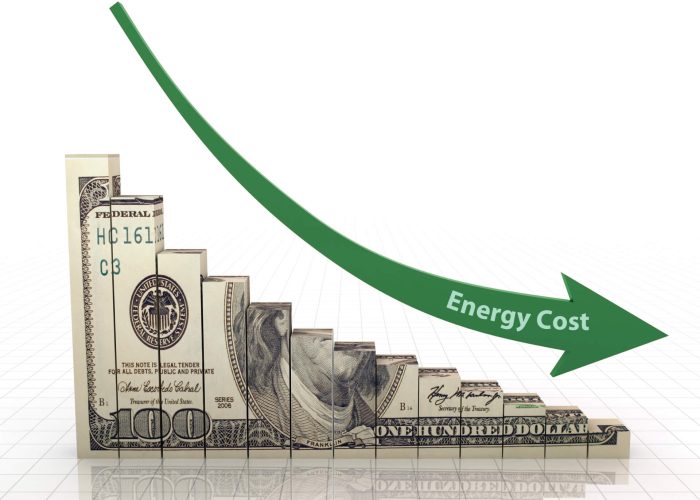
- Reduced Energy and Operating Costs: Performance contracting projects are structured to be budget-neutral and can produce positive cash flow for the owner as the cost of energy continues to rise and savings exceed annual costs.
- Lower Delivery Risk: Performance contracting uses an integrated delivery method that resembles a design-build approach, with a single firm accountable for design, engineering, and construction. A well-defined scope established through facility assessments eliminates change order risk within the agreed scope. Transparency through our open-book pricing process removes hidden costs and clarifies where funds are allocated.
- Opportunity to Address Deferred Maintenance: While deferring maintenance may seem like a cost-saving strategy at first, it often leads to bigger, more expensive problems over time. Small, avoidable issues can escalate into major repairs that strain budgets and disrupt operations. Performance contracting enables you to address these issues as you upgrade your facilities.
- High-Performing Buildings and Environmental Quality: Contracts can include performance criteria for air quality, humidity, temperature, and noise levels to support learning and working environments. ENERGY STAR building performance is frequently pursued and documented for clients.
- Long-Term Accountability and Performance Assurance: Active monitoring, seasonal optimization, owner training, and reporting provide ongoing assurance that buildings continue to meet the guarantee. Performance Services’ in-house Performance Assurance team supports measurement, data analytics, utility rebates, and ENERGY STAR certification.
As you can see, there are multiple benefits associated with performance contracting.
What Can Be Included in a Guaranteed Energy Savings Project
GESC projects can include a wide range of energy and infrastructure improvements.
- Energy conservation measures include HVAC replacements and retrofits, controls upgrades and reprogramming, LED lighting, and other equipment improvements. Savings are calculated against a pre-project benchmark year of energy consumption.
- Renewable energy is available in many states; solar can be included within a GESC that follows the same budget-neutral funding approach.
- Deferred maintenance of long-overdue equipment and building system replacements can be bundled into the energy project to capture both energy and operational savings.
- Advanced Metering Infrastructure and water solutions are available for cities and towns. This can include replacing aging water meters with AMI systems and modernizing wastewater facilities. In many states, operational savings and revenue protection from accurate metering support the project’s financial model. Learn more about the water management solutions Performance Services offers.
If you want to read a public owner’s full guide to unlocking savings and efficiency, click here.
Measurement and Verification in Guaranteed Energy Savings Contracts
Measurement and Verification (commonly known as M&V) confirms that installed measures perform as intended and that savings meet or exceed the guarantee. M&V can include utility bill reviews, energy data analytics, equipment run-time analysis, and an annual savings report for the owner. Energy performance is tracked for the life of the contract.
Performance Assurance services can include four-season optimization, owner training, support for utility rebates, and assistance with ENERGY STAR certification. At Performance Services, the Performance Assurance team becomes the owner’s primary contact at project closeout and maintains ongoing communication through a client portal, ensuring the customer continues to have building performance support after the project is complete.
Project Cost Transparency and Pricing
Owners frequently ask how pricing is managed in a GESC. Performance Services uses open-book pricing to provide line-item transparency, ensuring the best value for the customer.
Performance Services is a vendor-neutral company, meaning owners can select the subcontracts they want to use. This is called vendor independence, and it allows for minority business participation and includes local subcontractors when necessary. The advantages of vendor independence lead to lower costs, owner control, service options, and flexibility.
Performance Services also commits to no change orders within the agreed scope, taking responsibility for scope oversights based on final bids and pricing. This is a significant way we help owners keep project costs down and stay within their budget.
Energy Star Buildings and High-Performing Outcomes
Many public owners use GESC projects to pursue ENERGY STAR recognition as evidence of sustained building performance. Performance Services can support benchmarking and provide recommendations to reduce energy use, monitor data for 12 consecutive months, and help clients earn the label.
For a state-by-state overview of how ENERGY STAR and performance contracting can work together under enabling statutes, contact us to start the conversation.
Integrating Design-Build with Guaranteed Energy Savings
Performance Services delivers both design-build and GESC projects. These models complement each other for many reasons. For new construction and major renovations, design-build provides single-source accountability, a guaranteed price, client-approved best-value subcontractors, a no-change-order commitment, and long-term project accountability. Energy-focused renovations can be procured as a GESC, yielding budget-neutral funding and guaranteed performance over time.
Owners can evaluate which delivery method best fits their needs accordingly. With an integrated approach, Performance Services’ in-house project teams of expert architects and engineers will bring your project to fruition.
Typical Timeline and Owner Responsibilities in Guaranteed Energy Projects
While each project is unique, Performance Services’ proven process is consistent. Owner effort centers on early clarity of priorities, timely access for site reviews, review of proposed measures and financials, and ongoing collaboration with the Performance Assurance team after turnover.
How to Evaluate a Guaranteed Energy Savings Contract Proposal
A thorough owner review should address:
- Clarity of Scope and Performance Criteria: Confirm that energy measures, indoor environment standards, and any water or wastewater components are clearly defined and tied to measurable outcomes.
- Savings Guarantee and M&V Plan: Verify the baseline, assumptions, weather normalization approach if applicable, reporting frequency, and corrective action process.
- Pricing Transparency and Change Order Approach: Ensure you will receive open-book pricing and confirm the provider’s position on change orders within the agreed scope.
- Provider Qualifications and Team: Consider NAESCO accreditation where relevant, dedicated performance assurance resources, and experience in similar markets.
Getting started with Performance Contracting
Public owners can begin with a no-obligation facility assessment to benchmark energy use, identify savings opportunities, and establish priorities. From there, the owner can proceed with a qualifications-based selection as allowed by state statutes, followed by an investment-grade audit that sets the guaranteed savings and financial plan.